
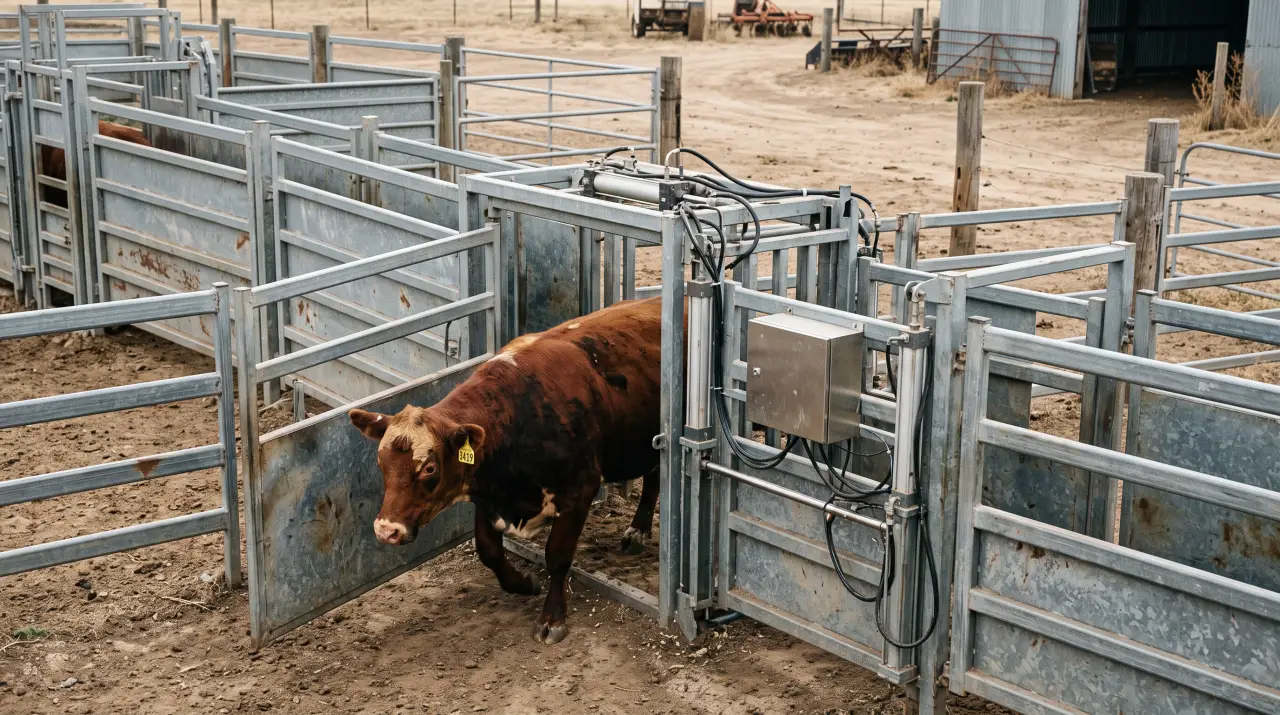
Running cattle through a squeeze chute to sort by weight is one of those jobs that wears out people and animals alike. It takes a crew, it takes time, and every animal that goes through learns to fight harder the next time. Electronic ID tags paired with automatic drafting gates change the math on that. Instead of chasing a 1,400-pound steer into a chute to read a tag and decide where it goes, you let the animal walk through a weigh platform at its own pace, and the gate sorts it - light ones one way, heavy ones the other - without a fight. This guide covers how the whole system works, what it costs, where it makes sense, and where it does not.
An electronic ID tag - often called an EID tag or RFID ear tag - is a passive radio-frequency transponder sealed inside a standard ear tag. Passive means it has no battery. The tag only transmits when it is energized by an external reader antenna, which excites the tag's coil and draws enough power to send back its unique identification number.
The standard in use for livestock worldwide is ISO 11784/11785, operating at 134.2 kHz in the low-frequency range. Low frequency was chosen deliberately: it penetrates animal tissue and reads reliably when the tag is partially buried in mud, hair, or a thick ear. You will see two encoding formats referenced - HDX (half-duplex) and FDX-B (full-duplex). HDX sends and receives in alternating phases; FDX-B transmits continuously during the reader's listen window. Most modern panel readers handle both formats. Most commercial cattle tags sold today are FDX-B, but a working sorting setup should confirm reader compatibility before committing to a large tag order.
In the United States, official livestock identification uses the 840-prefix tag system. A 15-digit number beginning with 840 identifies the animal as born or first identified in the USA. These are the tags required under USDA's Animal Disease Traceability framework for animals moving interstate, and they tie into official premises ID numbers. If your operation sells animals through sale barns or ships across state lines, 840 official tags are the right choice - they are the same EID technology, just with a nationally recognized numbering structure managed through accredited tag manufacturers like Allflex, Datamars (formerly part of Tru-Test), and others.
For strictly on-farm sorting purposes where you are not concerned with official traceability, you can use non-official EID tags at lower cost, but most producers buying into a full drafting system just use 840 tags from the start. You are tagging the animal anyway; there is no reason to use a tag that creates administrative problems later.
There are two main ways to read an EID tag: with a stick wand or with a panel reader.
A wand reader is handheld. You walk up to an animal in the chute, hold the antenna near the ear tag, and the unit beeps and logs the number. Wands are inexpensive - most fall in the $300 to $700 range - and they are the right tool for chute-side work: recording treatments, confirming identity during pregnancy checks, scanning an animal before loading. They are not useful for drafting because you still need the animal restrained.
A panel reader is a fixed or portable antenna array large enough for an animal to walk through. The antenna is typically built into the sides of an alleyway or into a dedicated walk-through frame. As the animal passes through, the panel reads the tag without any operator involvement. Panel readers capable of reliable single-animal reads in a moving alley run $1,500 to $4,000 depending on read-window size, antenna configuration, and whether the controller is integrated or separate. Read rate on a properly installed panel should be above 98 percent on animals with properly seated tags - that figure drops with old, damaged, or lost tags, which is the core limitation of any EID-based system.
For a drafting setup, the panel reader is mounted upstream of the weigh platform so the system knows which animal is standing on the scale before the gate decision is made.
A complete drafting system has four physical components working together: the weigh platform, the panel reader, the gate mechanism, and the controller.
The weigh platform is a walk-over scale set flush in the alley floor or slightly raised with a gradual approach ramp. The animal walks over it naturally without stopping - this is the key to stress-free operation. Load cells under the platform capture weight as the animal crosses. The system typically averages multiple load cell readings over the transit time to filter out the animal lunging or leaning, and it records a clean bodyweight associated with the tag read from that same transit. A good walk-over weigh platform can capture weights accurate to within one to two percent on a moving animal, which is close enough for sorting decisions even if it is not as precise as a static weigh in a squeeze chute.
The panel reader is positioned at the entry of the weigh platform or just before it so the tag read and the weight capture are linked to the same animal event. The timing matters: if the reader and scale are not synchronized, you can get mixed reads in a crowded alley, which is why most commercial drafting systems sell the reader and scale as an integrated unit or at minimum as components designed to communicate over a common data bus.
The gate is the output device. A two-way gate puts animals into one of two destinations - most commonly "hold back" and "pass through." A three-way gate can sort into three separate pens in a single pass. Gates are actuated pneumatically (requiring a small air compressor) or in some systems hydraulically or with electric actuators. Pneumatic systems are fast - gate travel time is a fraction of a second - and that speed matters because you are not stopping the animal. The gate position has to be set before the animal arrives at it. The controller predicts gate timing based on the animal's transit speed through the alley.
The controller is the brain. It runs the sorting logic, stores the tag database, logs every read-and-weigh event, and communicates with whatever farm software you are using. Some systems use a dedicated touchscreen panel mounted at the drafting setup; others run software on a tablet or laptop connected over Bluetooth or a local network. The controller is where you set the sorting rules.
The drafting logic is nothing more than a set of rules applied to the data captured at the scale. The gate controller looks up the incoming tag number, checks it against the rules you have set, and actuates accordingly. Common sorting scenarios include the following.
Weight-based market sorting is the most common use case. You set a target weight - say, 1,350 pounds for your market specification - and any animal at or above that weight goes left to the finished pen, any animal below goes right to stay on feed. You can set it as a simple above/below threshold or as a range with an upper limit to catch overweight animals that are going to discount at the packer. The system runs this sort every time the animals are moved through the alley, which in a feedlot might be weekly. You identify your heaviest animals without a single restraint event.
Breeding stock separation uses the same logic but based on tag group membership rather than weight. You load a list of cow IDs tagged for pregnancy check or for a different breeding pasture, and the gate pulls them automatically as they pass through.
Treatment pulls are one of the highest-value uses outside of pure weight sorting. If you have animals on a withdrawal period or animals that need a follow-up treatment, their tag numbers go into a "pull" list. The gate holds them back. The handler only needs to deal with those specific animals. The rest of the herd goes through without being touched.
Sale group separation is useful when you are shipping a partial load. Sort the consigned animals out the day before loading without disturbing the rest of the pen.
The sorting rules can be as simple or as layered as you need. Most controller software allows multiple simultaneous rules with a priority order, so an animal that qualifies for both a treatment pull and a weight sort goes to the treatment pen first.
The physical sorting is what most people focus on, but the data side of an EID-based drafting system is where the long-term value accumulates.
Every time an animal passes through the weigh platform, the system logs the tag number, the timestamp, and the bodyweight. If you are running animals through weekly or bi-weekly, you build a weight history for each individual. From that history the controller - or connected software - calculates average daily gain, or ADG: how many pounds per day the animal is putting on. ADG is one of the most useful numbers in a feeding program because it tells you which animals are converting feed efficiently and which are not. Cattle with consistently low ADG relative to their pen mates are candidates for a closer look - health issues, social stress, inadequate bunk access. Without individual weights, you are working with pen averages that hide this variation.
Linking weight records to the animal's EID also means you have a documented performance history that follows the animal. When animals leave your operation, their weight records and treatment history can go with them in a format that sale barns and packers increasingly expect. For operations enrolled in age and source verification or natural programs, this record-keeping is not optional - it is the product.
Treatment records tied to EID create a withdrawal management system. When you record a treatment against a tag number and enter the withdrawal period, the software can automatically flag that tag as "do not ship" until the clearance date passes. The drafting gate enforces it physically by holding the animal back. This is a meaningful food-safety backstop for operations moving animals quickly through short feeding periods.
Most drafting system software will export records in standard formats compatible with common herd-management programs or custom spreadsheets. The data interoperability between systems is better than it used to be but still imperfect - confirm export formats before you commit to a specific platform if data integration with existing records is a priority.
A drafting system does not look the same on every operation. There are a few distinct configurations worth understanding.
Permanent in-yard setups are built into an existing working alley, typically at the head of a crowd tub or at a strategic chokepoint in the pen system. The weigh platform is set in the floor, the reader is mounted on the alley walls, and the pneumatic gate is plumbed to a permanent air line. Animals move through as part of normal pen management - rotating to fresh feed pens, moving to shipping alleys, returning from water. The system captures weights passively without anyone doing anything specific. This is the feedlot and backgrounder model. Companies like Tru-Test/Datamars, Gallagher, and Te Pari have established product lines for this configuration, and most large commercial feedlots in the US and Australia run some version of it.
Portable setups are trailer-mounted or skid-mounted units that move between pastures or between client farms. The weigh platform, reader, and gate fold into a compact unit that connects to a portable air compressor and a tractor or generator for power. Portable systems cost more per unit than fixed installations and generally have lower throughput, but they bring the technology to cow-calf operations or stocker programs that do not have a permanent working facility worth building around. The trade-off is setup time and the fact that portable gates are typically two-way only.
Dairy auto-drafting is a different application but uses the same core technology. In a dairy, the EID tag - or increasingly a neck-mounted transponder or leg tag - is read as cows exit the milking parlor. The auto-draft gate, made by companies like Lely, DeLaval, or GEA, sorts cows post-milking into return to pen, veterinary pen, breeding pen, or dry-off pen, based on rules set in the herd management software. The system integrates milk production data, reproductive status, and health flags. A cow that the system has flagged for a pregnancy check gets sorted to the vet pen without anyone having to remember which cow it was. Dairy auto-drafting is mature technology with high adoption rates in modern parlor operations, and it is the proof point that this approach works reliably at scale.
Beef feedlot and backgrounding is the fastest-growing adoption area for walk-over weigh and auto-draft. A mid-size feedyard running 5,000 to 15,000 head gets the most leverage from automated weight sorting because they are making shipping decisions constantly and labor costs are high. A permanent alley-integrated system at a 5,000-head yard can pay for itself in reduced processing labor within two to three years at current labor rates, even without accounting for the marketing benefit of shipping cattle closer to target weight.
Rough cost ranges in recent years, in US dollars, for the main components run roughly as follows:
A complete, functional permanent system for a beef operation - integrated panel reader, walk-over scale, 3-way gate, controller, installation - runs $15,000 to $35,000 installed, with significant variation based on site conditions and whether the alley infrastructure already exists.
For a 500-head stocker or backgrounder operation turning cattle two to three times per year, that capital cost is hard to justify purely on labor savings. The pencil-out point depends heavily on what labor costs in your area and how many times per year you are making sorting decisions. A rough rule of thumb from operations that have done the math: below 300 to 400 head in continuous inventory, the labor savings alone rarely justify a full permanent system. The data value - better ADG tracking, withdrawal management, traceability compliance - can change that math, but only if you actually use the records.
For larger operations - commercial feedlots above 1,000 head, backgrounders with rapid turnover, dairies above 200 cows - the economics are generally solid. The system often pays for the weigh platform and gate within three to five years in labor alone, and the marketing value of shipping closer to target weight adds further return that is harder to put an exact number on but is real.
Portable systems are a middle path. Renting access to a portable drafting unit through a co-op, a local feedstore, or a custom operator is becoming more common, and it lets smaller operations access the technology without the capital commitment.
The practical day-to-day change is not dramatic - it is cumulative. You stop asking two or three people to help you run cattle through a chute every time you need to move the heavies. You stop guessing at which animals in the pen are close to weight based on visual assessment. You stop finding out at the sale barn that you shipped three animals that were fifteen pounds light of your contract specification.
Cattle that go through a walk-over system with no restraint and no handling pressure are calmer with each pass. They learn the alley is not a threat. That reduced stress has a measurable effect on daily gain around sorting events - animals that are handled roughly show a drop in ADG for several days following a stressful chute event. A weigh platform that an animal walks through in three seconds without being touched does not create that stress response.
For the operator, the job changes from "sort cattle" to "check the sort report." The system produces a list of which animals went to which pen. You verify the sort looked right and investigate any tag-read failures. The physical work of that day goes from several hours to thirty minutes.
No EID-based drafting system works better than its tag retention rate, and tag retention is a real problem. Ear tags fall out. They get torn out on fence wire, in brush, in fights between animals. An animal without a tag is invisible to the system. For a drafting setup to be reliable, you need a consistent tagging protocol, a procedure for retagging lost tags promptly, and a habit of cross-checking the number of animals in a pen against the number of tag reads captured. Operations that do not maintain discipline around retagging end up with a system that sorts most of the herd correctly and lets the untagged animals pass through unsorted - which is better than nothing but not what you paid for.
Read failures happen even on tagged animals. Dirty tags, tags that have rotated to a poor read angle, tags that are damaged or cracked - all of these produce missed reads. A good panel installation on clean cattle with well-seated tags should read above 98 percent. A dusty feedlot alley in July with tags that are six months old and some are flopped over will read lower. Budget for re-reads and check your read success rate periodically.
Pneumatic gates require maintenance. Seals wear. The air compressor needs attention. The controller software needs updates. These are not complex systems, but they are mechanical systems in a farm environment, and they will need service. Budget accordingly and make sure your supplier has service support in your area before you buy.
The system still does not handle the animal once it is sorted. The drafting gate moves the animal to the right pen. If the animal needs a treatment, a foot trim, a pregnancy check, or a blood draw, you still need a chute and a crew. The drafting system is a sorting tool, not a handling system. It removes the sorting step from the chute-side workflow; it does not eliminate chute work.
For very small operations - a 50-cow commercial herd, a 100-head stocker lot - the economics simply do not work for a full dedicated system. At that scale, sorting cattle by walking through them with a wand reader and a sorting stick takes twenty minutes and requires no capital investment. The EID tags are still worth having for the traceability and treatment records, and a wand reader is worth the $400, but the gate and scale are a luxury that will not pay back in a reasonable time frame.
If you are not running EID tags yet, start there. Tag every animal you bring in with an 840 official tag. Buy a wand reader. Start keeping electronic records against those tag numbers - at minimum, entry weight, treatments, and exit weight. That disciplines your team around EID-based recordkeeping and costs very little.
From there, a walk-over weigh platform without auto-draft is a reasonable second step for operations in the 200 to 600 head range. You get the individual weight data and ADG tracking without the gate cost. Manual sorting from the weight report is still labor-intensive, but the records alone have value.
The full auto-draft system makes sense when you have identified a specific sorting task that you are doing frequently - at least monthly - across a herd large enough that manual sorting is a significant labor event. If that describes your operation, the system will pay. If you are sorting twice a year on 200 head, it probably will not.
When you are evaluating systems, get a demonstration on cattle similar to yours. Panel reader performance varies with alley geometry, animal flow rate, and tag condition. A reader that works well in a straight 30-inch alley may read poorly in a curved approach with high-traffic crowding. Ask the supplier for installation requirements in writing and hold them to the read-rate guarantees.
EID tags and auto-drafting gates solve a real problem for operations of the right size: they remove the labor and animal stress of manual weight sorting, they capture individual animal performance data that was previously unavailable without a dedicated crew, and they enforce withdrawal and traceability compliance at the gate rather than relying on paperwork. The technology is mature, the standards (ISO 11784/11785, 134.2 kHz, 840 official tags in the US) are settled, and there are multiple established suppliers with working products.
Where the technology is oversold: it will not transform a disorganized operation into a well-run one. If your tagging protocols are sloppy, if animals routinely lose tags, if nobody is looking at the data the system generates - the system underperforms and the capital sits underused. The data value is only real if someone acts on it.
For operations under 300 head with infrequent sorting needs, a full auto-draft installation is hard to justify on economics alone. EID tags and a wand reader are worth the investment at any scale. The gate and scale need a larger herd and a frequent sorting cadence to pencil out.
For operations at 500 head and up - particularly backgrounders and feeders turning cattle on a defined program, or dairies managing cow flow through a parlor - auto-drafting is one of the better capital investments available in livestock technology right now. It does what it is supposed to do, it reduces one of the most labor-intensive and stressful tasks in cattle management, and it generates records that have increasing value as traceability requirements tighten. That is a straightforward case to make, without overstating it.
A complete permanent beef setup with an integrated panel reader, walk-over scale, three-way gate, controller, and installation runs roughly $15,000 to $35,000 installed. Individual pieces vary widely: a three-way commercial gate alone is $8,000 to $18,000, and an integrated reader-plus-weigh-platform unit runs $6,000 to $15,000. Site conditions and whether the alley infrastructure already exists drive most of the price spread.
Livestock EID tags follow the ISO 11784/11785 standard, operating at 134.2 kHz in the low-frequency band. Low frequency was chosen because it penetrates hair, mud, and thick ear tissue for reliable reads. Tags come in HDX and FDX-B encodings, with FDX-B most common on cattle sold today. US official tags carry a 15-digit number beginning with the 840 prefix.
A walk-over weigh platform captures bodyweight within one to two percent on an animal moving across it at its own pace. Load cells under the platform take multiple readings during transit and average them to filter out lunging or leaning. That is less precise than a static weigh in a squeeze chute, but accurate enough for reliable weight-based sorting decisions.
Below roughly 300 to 400 head in continuous inventory, labor savings alone rarely justify a full permanent drafting system. Operations at 500 head and up, especially feedlots and backgrounders turning cattle on a defined program, typically recover the weigh platform and gate cost within three to five years on labor alone. Sorting at least monthly is what makes the economics work.
Join our list for practical guides on farm tech, precision agriculture, and tools that work.