
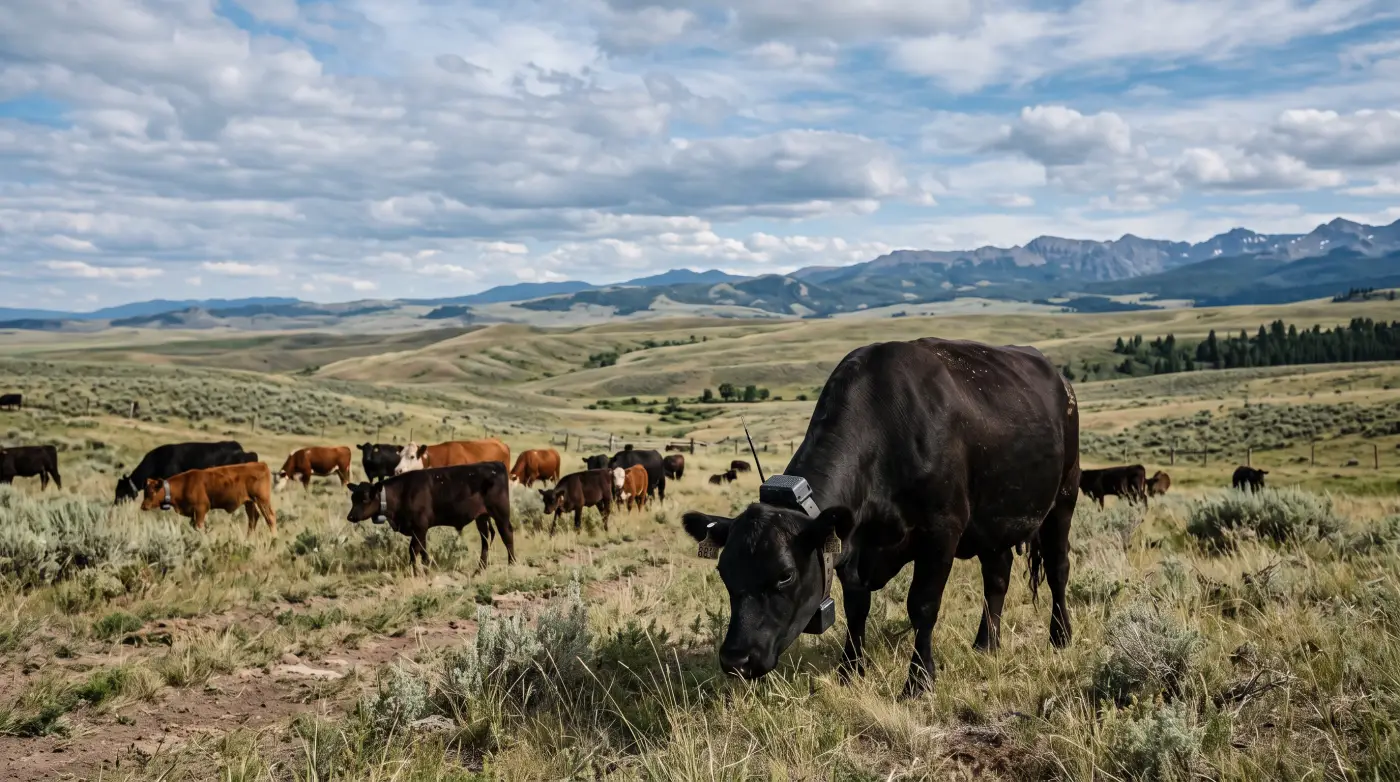
GPS livestock tracking and virtual fencing have moved out of the research-station novelty category and into the working-operation toolkit on enough farms and ranches that the conversation is no longer whether the technology functions but where it actually pencils, where it does not, and which of the available systems are worth the capital and the management time. The 2026 picture is that the GPS collar hardware has become reliable enough for most cattle operations, that the virtual fencing systems have accumulated enough field experience to map out where they work and where they fall short, and that the operations getting real value from the technology are the ones that built the implementation around an honest assessment of their grazing pattern, terrain, and labor situation rather than around the marketing pitch.
This is a working operator's read on GPS livestock tracking and virtual fencing in 2026: what the actual systems on the market do and how they work, what the field results have looked like in commercial operations across different terrains and herd sizes, where the technology earns its keep and where it does not, what the failure modes look like, and how to evaluate whether your operation is the kind that should be writing the check this year, the kind that should wait another season for the technology to mature, or the kind that probably should not adopt the technology at all. The goal is to give you enough detail to make the decision rather than enough cheerleading to make the sale.
The category covers two related but distinct functions that often get bundled in the marketing material and sometimes get bundled in the hardware, so it is worth separating them up front. GPS livestock tracking is the function of putting a GPS-enabled collar or ear tag on the animal, recording its position at regular intervals, and making that position data available to the operator through a phone app or web dashboard. Virtual fencing is the function of using a GPS-enabled collar to deliver an audio cue and an electrical stimulus when the animal approaches or crosses a boundary that the operator has drawn on a map, with the goal of training the animal to stay within the drawn boundary without a physical fence.
The simplest GPS tracking systems are passive in the sense that they do not attempt to influence the animal's behavior. They report position, alert the operator if an animal stops moving for an unusual length of time or moves outside an alert zone, and provide historical movement data for the herd. These systems are useful for theft and predation monitoring, for finding strays in heavily timbered or rough country, for documenting grazing distribution across a pasture, and for the welfare-related early warnings that a sick animal often signals through reduced movement before any other symptom is visible.
Virtual fencing systems are active in the sense that they apply audio and electrical cues to keep the animal within a defined boundary. The training process is structured: the collar plays an audio tone as the animal approaches the virtual boundary, the tone escalates if the animal continues toward the boundary, and a short electrical stimulus is delivered if the animal crosses. The training period for a naive herd ranges from a few days to a few weeks depending on the system, the species, and the prior fencing experience of the animals, and a well-trained herd will respond to the audio cue alone the vast majority of the time, which means the electrical stimulus is rarely actually delivered after the initial training is complete.
The hardware on a modern virtual fencing collar includes a GPS receiver, a cellular or LoRa-style radio for backhaul to the cloud, a solar panel and rechargeable battery, an audio speaker for the warning tone, and the electrodes that deliver the stimulus. The collar itself is the major capital cost of the system and is the component that has driven most of the cost-per-head economics of virtual fencing. The cloud platform provides the boundary drawing tool, the herd management dashboard, the alerts and reports, and the integration with mapping and weather data that makes the system usable in a working operation.
The major commercial systems available to U.S. and international operators in 2026 include Nofence, which is a Norwegian company that has the longest track record in commercial deployment and is now widely available in the U.S., U.K., and across Europe; Vence, which is a U.S. company that was acquired by Merck Animal Health and is focused on cattle in extensive grazing systems; Halter, which is a New Zealand-based system with a strong presence in pastoral dairy operations and increasingly in beef cattle; Gallagher's eShepherd, which is the technology that emerged from the CSIRO research in Australia and is now being commercialized; and a handful of regional systems that operate in particular markets. The systems differ in collar design, communication backhaul, training protocol, and pricing model, and the right system for a given operation depends as much on these implementation details as on the underlying concept.
The most extensive commercial experience with virtual fencing in cattle has come from extensive western U.S. ranching, from Australian and New Zealand pastoral operations, and from the rotational grazing community in the U.S. Midwest and Northeast. The results have been broadly encouraging but with enough caveats that an honest assessment requires looking at each context separately.
Extensive western ranches have used virtual fencing primarily for management of large herds across rough country where building physical fence is expensive or impractical. The University of Wyoming and the USDA Agricultural Research Service have run multi-year trials on Nofence and Vence collars in cattle on rangeland in Wyoming, Montana, and Oregon, and the published results have shown containment rates above 95 percent for trained herds across most of the trial conditions. The exceptions are instructive. Containment rates drop in the first week of a new boundary as the herd encounters the boundary in unfamiliar terrain, drop when the GPS signal is degraded by canyon terrain or heavy timber, drop when the collar batteries are low or the cellular backhaul is intermittent, and drop in the presence of bulls during breeding season when the social drive overrides the trained avoidance behavior. The practical implication is that virtual fencing in extensive country works well as a management tool for the bulk of the grazing year but is not a perfect substitute for physical fence at the perimeter where a containment failure would result in a serious problem.
Pastoral dairy operations in New Zealand and Australia have used virtual fencing primarily for daily strip grazing and break management in intensive grazing systems. The Halter system in particular has accumulated thousands of head of commercial deployment experience in dairy operations and the published case studies have shown labor savings on the order of one to two hours per day for the daily strip moves, improved pasture utilization through more precise allocation of the daily break, and meaningful reductions in lameness and other welfare metrics that the case studies attribute to the smoother handling pattern. The dairy use case is interesting because the cattle are handled twice a day for milking and are extremely habituated to the system, which makes the training and the ongoing management both easier than in extensive operations.
Rotational grazing operations in the U.S. Midwest and Northeast have used virtual fencing for paddock subdivision in operations that were already running intensive rotation with polywire and step-in posts. The early adopters in this segment have generally reported satisfaction with the technology, with the labor savings on the polywire moves offsetting a meaningful share of the collar costs over a multi-year period. The honest framing is that the operations getting the most value here are the ones running thirty or more paddock moves per season per group, where the cumulative labor of the polywire setup adds up to a meaningful number, rather than the operations running a few moves per season where the polywire was not actually a binding constraint on the operation.
Sheep and goat operations have a separate set of considerations that the cattle-focused literature does not address. Nofence has the longest track record in sheep and goats, particularly in Norwegian and U.K. operations, and the results have been mixed. The training response in sheep is different from cattle and requires more careful protocol attention. The collar fit is more difficult on smaller animals and the wool can interfere with the electrode contact in unshorn sheep. The flocking behavior in sheep means that a single animal that crosses the boundary will often pull the rest of the flock with it, which is a different failure mode than the cattle case where individual animals tend to respond to the cue individually.
The honest accounting of where virtual fencing actually pays for itself in 2026 starts with the realistic cost picture. Per-head costs for the major commercial systems range from roughly $40 per head per year to $150 per head per year depending on the system, the contract length, and whether the collars are owned or leased. Some systems include the cloud platform fee in the per-head price and others charge separately. The collars themselves have useful lives that vary by system but are generally in the three-to-seven-year range, and the battery and electronic component reliability is the main driver of the actual lifetime in field conditions.
The use cases where these costs pencil consistently in 2026 are the ones where the operation has a labor cost or capital cost that the technology directly displaces. Daily strip grazing in dairy and intensive beef rotation operations has the strongest pencil because the labor savings are direct and recurring. Replacement of physical fence on terrain where the fence cost would be very high - canyon country, timbered ground, riparian zones with regulatory complications - has a strong pencil because the alternative is a large capital expense that the virtual fence avoids. Predator and theft monitoring in operations with a meaningful loss history can justify the cost on the loss prevention alone, particularly where insurance is unavailable or carries large deductibles. Multi-pasture extensive operations where the labor of riding to gather and check cattle across a large area is the binding constraint can justify the cost on the time savings to the operator or the labor budget.
The use cases where the costs do not consistently pencil in 2026 are the ones where the operation is essentially trying to convert a working physical fence and a manageable labor situation into a virtual one. A small operation with a few hundred acres of physical-fenced pasture and a manageable labor situation is unlikely to recover the per-head costs from any combination of marginal labor savings and management improvement. The technology is real but the economic case requires a real underlying problem that the technology is solving.
The secondary benefits that often come up in the marketing - improved grazing distribution, more precise pasture management, better data on animal behavior and welfare - are real but are difficult to put a hard dollar value on for the kind of pre-purchase pencil that makes a capital decision. The operations that report the highest satisfaction with the technology tend to be ones that valued these secondary benefits as a meaningful share of the return, which means the framing matters and the operations going in with a strict labor-savings-only mindset sometimes come out underwhelmed.
The technology is not magic and the failure modes are worth understanding before the capital is spent. The most common failure mode is GPS signal degradation in difficult terrain. Heavy timber, narrow canyons, deep draws, and steep north-facing slopes all degrade the GPS position fix that the collar uses to determine its location relative to the boundary. The systems all have some logic to handle GPS dropouts but the practical effect is that boundaries in difficult terrain need to be drawn with more buffer than boundaries in open country, and the containment performance in difficult terrain is meaningfully lower than in open country.
The second failure mode is cellular or radio backhaul outages. The collars need to communicate with the cloud platform to receive boundary updates and to report position and alerts. Most of the systems have some local logic that allows the collar to continue enforcing the last-known boundary during a backhaul outage, but the operator visibility into what is happening with the herd is degraded during the outage, and a long enough outage can leave the operator without confidence that the system is working. Cellular coverage in extensive western country is the chronic version of this problem, and the operations in poor-coverage areas need to evaluate the specific system's behavior in those conditions before committing.
The third failure mode is battery and solar charging issues in winter conditions. The collars rely on solar charging to maintain battery in extended deployments. Heavy snow cover on the collar, persistent cloudy weather, and short winter days can all reduce the solar input below the consumption rate, and a collar with a depleted battery is offline. The systems all have battery alerts and there are management protocols for collar swaps in winter, but the practical implication is that the operations using virtual fencing in heavy winter conditions have a higher management burden during those months than operations in milder climates.
The fourth failure mode is collar fit and animal welfare issues. A collar that is too loose can rotate on the animal's neck and lose proper electrode contact, which means the training cue is not delivered properly and the animal does not learn the boundary. A collar that is too tight can cause skin irritation and welfare problems. The fit needs to be checked at install and rechecked periodically, particularly in growing animals and in herds where the body condition changes meaningfully across the season. The major systems all have fit guidance and the experience base in 2026 is large enough that the fit problem is generally manageable, but it is a real management item rather than a set-and-forget situation.
The fifth failure mode is escapes by individual animals that for whatever reason do not respond to the training. The published containment rates of 95 percent or above are herd averages, and within a herd there are typically a small number of animals that respond less reliably than the rest. These animals are sometimes culled out of the virtual-fenced group and managed separately, sometimes accept the training after additional reinforcement, and sometimes turn out to be the kind of animal that would also test a physical fence and is best moved to a pen with high-tensile and a pulse charger. The practical implication is that the herd needs to be observed during the training period and that the management plan needs an answer for the animals that do not train.
The sixth failure mode is the social and behavioral dynamics that are not captured in the simple containment statistics. Bulls during breeding season, cows separated from young calves, animals in heat, and animals being chased by predators or dogs can all override the trained avoidance behavior. The systems all have some logic to handle these situations and the operators using the systems have developed management protocols that account for them, but the bottom line is that virtual fencing is not a perimeter security system and operations with serious neighbor relationships, road frontage, or other high-consequence containment situations need to maintain physical fence at those boundaries.
The operations that have implemented virtual fencing successfully share a few common patterns in how they went about it, and the operations that struggled with the implementation share a different set of patterns. The successful pattern starts with a clear definition of the problem the technology is supposed to solve, which is usually either labor savings on intensive rotation or fencing cost avoidance in difficult terrain. The implementation then matches the system choice to that specific problem, sizes the initial deployment to a manageable group of cattle that can be observed closely during the training and shake-out period, runs the first season with realistic expectations and a clear set of metrics to evaluate performance, and expands the deployment based on the actual experience rather than on the pre-purchase plan.
The unsuccessful pattern often starts with the technology rather than with the problem. The operation buys collars because the technology is interesting, deploys them across a larger fraction of the herd than is manageable for the first season, encounters the inevitable training and fit and connectivity issues with no buffer to absorb them, and either gives up on the technology or limps along with a deployment that is producing more management burden than value. The pattern is recoverable if the operation regroups and approaches the deployment more carefully, but the smoother path is to set up the implementation with realistic scope from the start.
The training period in particular deserves more attention than it usually gets in the marketing materials. The herd needs to be in a paddock that allows the animals to encounter the boundary in a controlled way, the operator needs to be available to observe the training and intervene if individual animals are not responding, and the boundary geometry needs to be simple in the early days so the animals can build a reliable mental model of where the boundary is. The complex boundary geometries that the marketing case studies show are achievable but not appropriate for a herd that is still in the training phase.
The integration with the rest of the operation is the other piece that gets underweighted. The collars produce a meaningful amount of data about herd location, movement, and behavior. That data is useful if it is integrated into the operator's daily management routine and is wasted if it sits in an app that the operator looks at occasionally. The operations that get the most value from the data tend to be the ones that have integrated the collar data with the rest of their herd management software, the pasture management plan, and the daily routine of checking on the herd. The integration is generally not as seamless as the marketing materials suggest and requires some setup work and some attention to the workflow design.
The hardware logistics are also a real management item. Collars need to be installed, checked, occasionally swapped for charging or repair, and removed when animals leave the operation. The collar inventory management requires its own protocol, particularly for operations with seasonal calf movements or with animals that are sold or culled at varying times of the year. The systems all have collar management features in the platform but the protocols around physical handling of the collars are an operation-level decision that needs to be planned out.
The regulatory picture for virtual fencing in the U.S. is generally permissive but is not entirely settled, and operations should be aware of the relevant considerations before committing to a large deployment. Some states have specific rules about fencing that may or may not apply to virtual fencing, particularly around open-range and fence-out states where the legal responsibilities for containment are different from fence-in states. The interaction between virtual fencing and state law on liability for animals on roads or on neighboring property is an area where the legal precedent is still developing, and operations with road frontage or sensitive neighbor relationships should not assume that virtual fencing satisfies the fence-out responsibility under state law without checking with a local attorney.
The welfare regulatory picture is more developed in Europe and Australia than in the U.S., and the conversation about whether virtual fencing constitutes acceptable animal handling is one that the industry has had to engage with explicitly. The major systems have all done research and welfare assessment on their training protocols, and the published results from independent research groups have generally found that the welfare impact of virtual fencing is comparable to or better than the welfare impact of physical fence alternatives, particularly when the comparison includes the welfare impact of barbed wire injuries and the welfare impact of working with a poorly maintained physical fence. The honest framing is that the technology is generally welfare-acceptable when implemented correctly and that the welfare risks are concentrated in the implementation issues - poor fit, undertrained herd, prolonged stimulus delivery to animals that are not learning - rather than in the underlying concept.
Organic and grass-fed certification programs have generally accepted virtual fencing as compatible with the certification requirements, but operations should check with their specific certifier before deploying because the certification language in this area has been catching up with the technology and there have been individual decisions that have surprised operators.
The system selection in 2026 depends on the operation's specific use case, terrain, herd size, and management approach. The honest framing is that no single system is best for every operation, and the marketing claims about which system is the leader should be read with the awareness that the leadership position varies by region, segment, and use case.
For extensive western U.S. cattle operations with cellular coverage challenges, Vence has developed a mesh-network architecture that handles the connectivity issue better than the cellular-direct systems, and the company's acquisition by Merck Animal Health has given it the resources and the support infrastructure that early-stage technology often lacks. The pricing is at the higher end of the market and the lock-in is meaningful, but the system performance in the relevant conditions is the strongest case in the segment.
For pastoral dairy and intensive rotation operations in regions with good cellular coverage, Halter is the system with the deepest track record and the most refined platform, particularly for the daily strip grazing use case. The system was built around dairy from the start and the workflow design reflects that focus.
For mixed cattle, sheep, and goat operations in regions with reasonable cellular coverage, Nofence has the broadest species support and the longest commercial track record. The collar design is well-developed and the platform is mature. The pricing is competitive and the contract terms are flexible.
For operations that want to evaluate the technology with minimal commitment, Gallagher's eShepherd and a few of the regional systems offer entry-level pricing that allows a smaller initial deployment to test the fit before committing to a larger fleet. The capability of these systems is generally a step behind the leaders but is sufficient for an evaluation deployment.
The trial deployment approach is the right approach for most operations. Buy enough collars for a single management group, run the system for a full grazing season including the training period and the seasonal weather extremes, evaluate the actual performance against the actual problem the technology is supposed to solve, and make the larger commitment based on the actual experience rather than on the pre-purchase forecast. The systems are mature enough that this approach will produce a good answer for most operations, and the answer will be more reliable than the answer from the marketing materials or from someone else's case study.
GPS livestock tracking and virtual fencing are real technologies that solve real problems for real operations in 2026. They are not magic, they do not replace good stockmanship, and they do not pencil in every situation. The operations getting the most value from the technology are the ones that have a specific labor or capital cost problem that the technology solves, that have implemented the technology with realistic expectations and a manageable initial scope, and that have integrated the data and the management workflow into the rest of the operation. The operations that should probably wait another season or two are the ones that are interested in the technology in the abstract but do not have a specific problem it is solving, the ones that are in regions where the connectivity or terrain conditions are at the edge of what the systems handle well, and the ones that do not have the management bandwidth to handle the implementation work that the technology actually requires.
The trajectory is clearly in the direction of more capable systems, lower per-head costs, and broader applicability. The collars are getting better, the platforms are getting more sophisticated, and the integration with the rest of the farm management toolkit is improving. An operation that does not buy in 2026 is not falling behind in any meaningful way and may be making the right choice for the operation's specific situation. An operation that does buy in 2026 is making a decision that will probably look reasonable in five years' time if the implementation is handled well.
The final note is that the underlying skills of stockmanship, pasture management, and operational discipline are not replaced by any of this technology. The operations that get value from virtual fencing are the operations that already have those skills and that use the technology to extend what they can do with the time and labor available. The operations that lack those skills will not have them filled in by the technology. That has been true of every farm technology since the moldboard plow and the reality is that virtual fencing is no exception.
Per-head costs for the major commercial systems in 2026 run roughly $40 to $150 per head per year, depending on the system, the contract length, and whether the collars are owned or leased. The collars themselves have useful lives generally in the three-to-seven-year range, with battery and electronic reliability driving the actual field lifetime. The economics pencil best where the technology displaces a real labor or fencing cost.
University of Wyoming and USDA Agricultural Research Service trials on Nofence and Vence collars have shown containment rates above 95 percent for trained herds across most conditions. Containment drops in the first week of a new boundary, in canyon terrain or heavy timber that degrades the GPS fix, when batteries run low, and with bulls during breeding season when social drive overrides the trained avoidance behavior.
Training a naive herd takes from a few days to a few weeks, depending on the system, the species, and the animals' prior fencing experience. The collar plays an escalating audio tone as the animal nears the boundary and delivers a short electrical stimulus only if it crosses. Once trained, a herd responds to the audio cue alone the vast majority of the time, so the stimulus is rarely delivered.
No single system wins everywhere. Vence, now owned by Merck Animal Health, uses a mesh network that suits extensive western ranches with weak cellular coverage. Halter has the deepest track record in pastoral dairy and strip grazing. Nofence offers the broadest species support across cattle, sheep, and goats. Gallagher's eShepherd suits low-commitment evaluation deployments. Match the system to your terrain and use case.
Join our list for practical guides on farm tech, precision agriculture, and tools that work.