
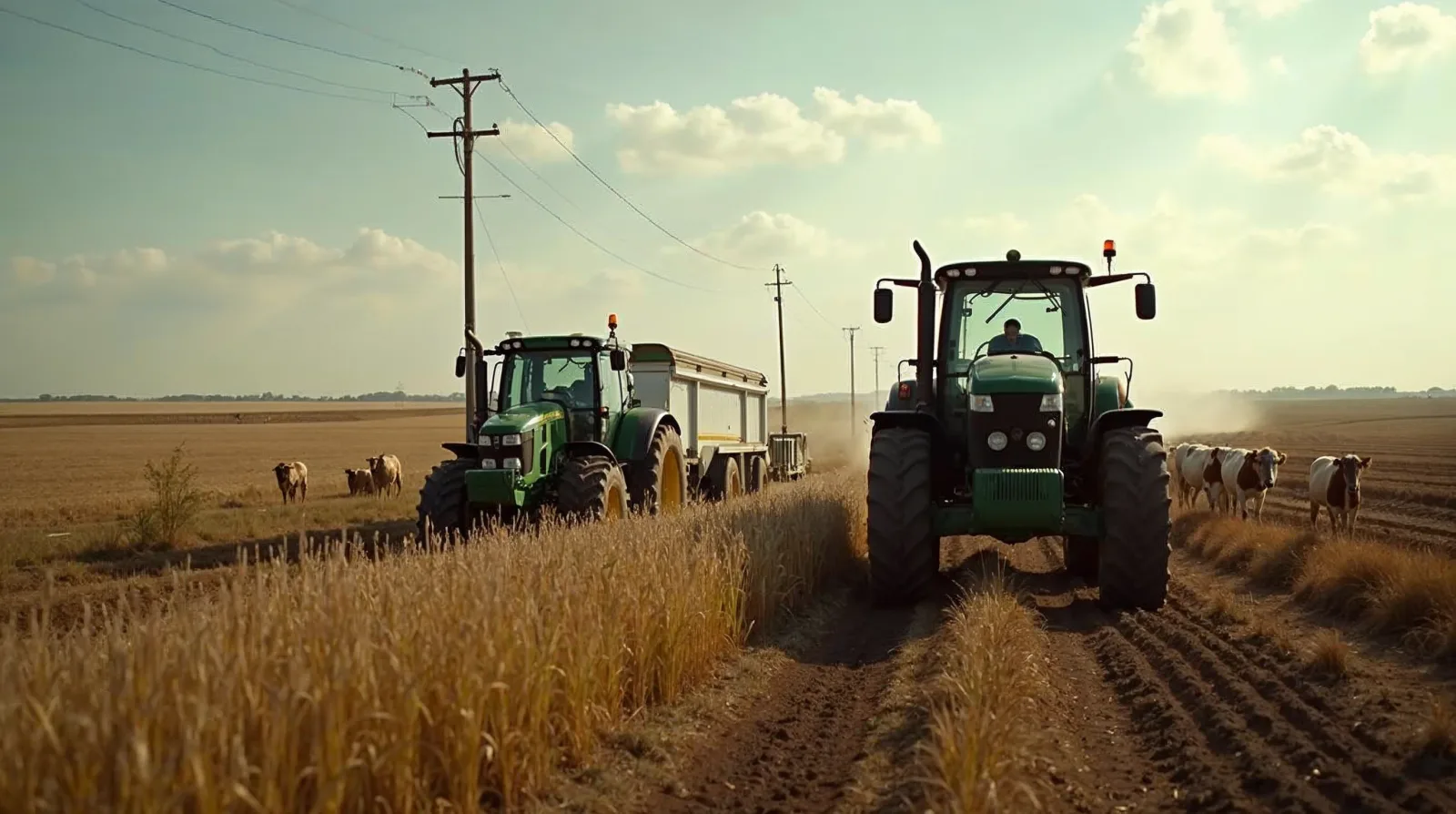
Water is the quiet limiting factor in almost every rotational grazing plan, and it tends to be the thing that gets worked out last when it should have been worked out first. A grazier can map paddocks, plan rest periods, and figure stocking rates down to the animal, and then run into the plain fact that the cattle will not travel half a mile to drink without trampling a lane, fouling the nearest paddock, and grazing the country around the water source down to dirt while the far corners go untouched. The pasture is only as usable as the water that reaches it, and on a lot of operations the difference between a grazing plan that works and one that looks good on paper is whether there is clean water within a reasonable walk of every paddock the plan asks the herd to use.
For ground that has no power and no developed water - which describes most leased pasture, a great deal of rangeland, and the back forty of plenty of owned places - the question becomes how to get water to the stock without a power line, a windmill, or a daily round of hauling. Solar powered stock watering has become the practical answer to that question, and the gear has gotten cheap enough and reliable enough that it is now the default solution rather than the exotic one. This is a working read on how these systems actually go together in 2026: how to size the daily water demand honestly, how to size the pump against the lift it has to overcome, how to size the solar array for the worst day rather than the best, why storage usually beats batteries, and how to move water across a rotational system without freezing it solid or spending money the operation will never get back. The aim is to build a system that matches the herd and the country, not to over-pump a small spring or under-build a setup that runs dry the first hot week in July.
Before any pump gets sized, it is worth being clear about why water is worth this much attention, because the placement of water determines how the herd uses the land more than almost any other single factor. Cattle, sheep, and most grazing stock will not walk far from water in hot weather, and the distance they are willing to travel sets the effective radius of every water source. The country close to the trough gets grazed hard and the country far from it gets grazed lightly or not at all, which is the opposite of what a rotational plan is trying to achieve. Uneven use is not just a forage problem - it concentrates manure and traffic near the water, bares the soil, invites weeds and erosion, and wastes the very forage the grazing plan was built to capture.
The fix that good graziers reach for is more water points, closer together, so that no paddock asks the herd to travel an unreasonable distance to drink. A portable or well-distributed water system lets the manager put water where the grazing plan needs it rather than forcing the plan to bend around a single fixed source, and that flexibility is most of the value. When water can follow the herd from paddock to paddock, the whole system gets more even use, the rest periods actually rest the ground, and the forage that used to go ungrazed in the far corners becomes part of the rotation. The water system is not a side detail of the grazing plan; it is one of the levers that makes the plan work, and treating it as an afterthought is how a sound rotation quietly fails to deliver what it promised.
This is also why the off-grid case matters so much. The places where rotational grazing has the most to offer - leased ground, rangeland, pastures far from the home place - are exactly the places with no power and no developed water, and a system that depends on a power line or a daily haul cannot follow the herd into that country. Solar pumping unlocks ground that was previously hard to use well, and that unlocked grazing is where the return on the system comes from.
A solar stock watering system is simpler than it sounds, and understanding the pieces makes the sizing decisions clearer. At its core it is a solar panel or small array that powers a pump, the pump that lifts water from a source, and a storage tank and trough that hold and deliver the water to the stock. The source can be a well, a spring, a creek, a pond, or a buried cistern, and the system's job is to move water from that source up to where the animals can drink it, on the power the sun provides during the day.
The defining design choice in most of these systems is that they run direct, without a battery. The panel feeds the pump through a controller, the pump runs when the sun is on the panel, and the water it moves during the day is banked in a storage tank rather than in a battery. The tank, not a battery bank, is what carries the herd through the night and through cloudy stretches, and that single decision - store water, not electricity - is what makes solar stock watering cheap and reliable. Water in a tank does not degrade, does not need replacing every few years, and does not lose capacity in the cold the way a battery does, so a system sized around storage avoids the most expensive and shortest-lived component a battery-based setup would carry.
The controller deserves a mention because it does more than switch the pump on. A good pump controller manages the array's output to keep the pump running efficiently across changing light, protects the pump from running dry when the source is low, and often takes a signal from a float switch in the storage tank so the pump shuts off when the tank is full and restarts when it draws down. Many controllers include maximum power point tracking, which squeezes more usable pumping out of the same panel in marginal light, and that extra efficiency is worth real water on the short, gray days when the system is working hardest to keep up. The float control and the dry-run protection are not luxuries - they are what lets the system run unattended for weeks without overflowing the tank or burning up the pump on an empty source.
Every other number in the system flows from one honest figure: how much water the herd actually drinks in a day under the conditions the system has to handle. Get this number wrong on the low side and the system runs dry in the heat when it matters most; pad it without thought and the operation pays for pump, panel, and tank it never uses. The right approach is to estimate the peak daily demand - the hottest, driest, most water-hungry day the herd will face - because a system that meets the peak meets every easier day automatically.
Daily consumption depends on the species, the size of the animal, the stage of production, the temperature, and the dryness of the feed. As rough working figures, a mature beef cow runs in the neighborhood of twelve to twenty gallons a day in moderate weather and can climb to twenty-five or thirty on a hot day, with a lactating cow on the high end and a dry cow on the low. A cow-calf pair drinks more than a dry cow alone. Sheep and goats run far lower per head, on the order of one to three gallons, but a large flock adds up. Horses sit somewhere in the middle. The feed matters too: stock on lush green pasture get a good deal of water from the forage and drink less, while the same animals on dry summer grass or hay drink considerably more. The practical move is to multiply a realistic hot-weather per-head figure by the largest number of animals the system will ever water at once, and to treat that product as the daily demand the system must meet, not as an upper bound to be shaved.
It is worth being honest rather than optimistic here, because the cost of under-sizing shows up as thirsty stock on the worst day of the year, while the cost of modest over-sizing is a little extra tank and panel that quietly buys peace of mind. A herd of fifty cows at a hot-weather figure of twenty-five gallons each is twelve hundred and fifty gallons a day, and that is the number the rest of the design has to deliver, every hot day, on whatever sun the day provides. Sizing to the peak is not over-building; it is building for the day the system actually has to perform.
With a daily demand in hand, the pump gets sized against two things: how much water it has to move and how hard it has to work to move it. The flow figure is straightforward - the pump has to deliver the daily demand within the hours of useful sunlight, so a system needing twelve hundred gallons across roughly six to eight productive solar hours has to average somewhere around two and a half to three gallons a minute, and more if the source or the weather is marginal. But flow is only half the picture, and the half that trips people up is the lift.
The number that actually governs pump selection is total dynamic head, which is the full resistance the pump has to overcome expressed as feet of water. It is the sum of the vertical lift from the water level in the source up to the storage tank, plus the friction loss in the pipe as water flows through it, plus any pressure the system has to deliver at the top. Vertical lift is the obvious part - a pump lifting water two hundred feet up out of a well and another forty feet up a hillside to a tank is working against two hundred and forty feet of elevation before friction is even counted. Friction loss is the part people forget: water flowing through a long, narrow line loses head to the pipe walls, and a run of small-diameter pipe over a long distance can add surprising head, which is why long pipe runs should step up a size to keep the friction loss in check. The pump has to be chosen against the total of all of these at the flow the system needs, because a pump that delivers plenty of water at low head can fall to a trickle when the head climbs.
This is where pump curves matter. Every solar pump has a curve that shows how its flow falls off as head rises, and the honest way to choose a pump is to find the point on its curve where it still delivers the needed flow at the system's actual total dynamic head, then confirm the panel can drive it there. The two broad families of pump suit different cases. Surface pumps sit at the water and push, and they suit ponds, creeks, springs, and shallow sources where the pump can be near the water - they are easy to service and often cheaper, but they pull rather than push on the suction side and so are limited in how far below them they can draw. Submersible pumps drop down into a well or a cistern and push from below, which is what deep wells require, and within the submersibles the diaphragm and helical-rotor designs are common on solar systems because they hold their flow well against high head and run efficiently on the modest, variable power a panel provides. Matching the pump type to the source - submersible for the deep well, surface for the pond or spring - is the first sorting, and reading the curve against the real head is the second.
The panel has to drive the chosen pump hard enough to meet the daily demand on the day with the least sun the system has to handle, and that worst-day framing is the whole discipline of array sizing. A panel sized for a long, clear July day will move plenty of water in July and fall short on the short, overcast days of the shoulder seasons when the herd still needs to drink. The peak-sun-hours figure for the location and season is the key input: a site might bank six or seven equivalent hours of full sun on a good summer day and only two or three on a gray winter one, and the array has to deliver the daily volume within those productive hours, not across the whole daylight span.
The sizing works backward from the daily volume. The pump moves a certain flow at the system's head while it is running well, the array determines how many hours a day it runs well, and the product of those has to cover the daily demand with margin. The honest practice is to size the array generously enough that the system meets demand on a cloudy day, not just a sunny one, because the cost of an extra panel is small against the cost of thirsty stock or a daily haul when the weather turns. A controller with maximum power point tracking helps the array do more with the light it gets, especially in marginal conditions, and tilting and orienting the panel for the worst-case season rather than the best squeezes out the extra hours that matter most when the days are short.
There is a real temptation to size the array for the average day and assume the good days will make up for the bad ones, and it is a mistake, because the herd drinks every day and cannot bank a sunny day's surplus in its own body to cover a cloudy one. The tank can bank that surplus, which is the next piece, but the array still has to be able to refill the tank within a stretch of poor weather, and that means sizing it for the conditions that stress the system rather than the ones that flatter it.
The storage tank is what lets a solar system that only pumps in daylight water a herd that drinks around the clock, and sizing it correctly is what turns a fair-weather setup into one that holds up through a run of clouds. The principle is simple: the pump fills the tank during the day, the herd draws it down day and night, and as long as the tank holds enough reserve to cover the gap between what the herd needs and what a poor day's pumping delivers, the stock never go short. The tank is doing the job a battery would do in an electrical system, and it does it better - cheaper, longer-lived, and unbothered by cold.
The common rule of thumb is to size storage for at least a full day's demand and preferably two or three, so the system carries the herd through a cloudy stretch or a pump that needs a day's attention without the animals running out. A herd needing twelve hundred gallons a day backed by a twenty-five-hundred or three-thousand-gallon tank has two days of cushion, which covers most weather and gives the manager time to react to a problem before it becomes an emergency. More reserve is more security, traded against the cost and bulk of the tank and the freshness of standing water, and the right amount depends on how reliable the weather is and how closely the system gets watched.
Storage also opens up a design that needs no pumping power at all at the trough: pump uphill to an elevated tank during the day, then let gravity feed the trough through a float valve so the animals draw from the tank at constant pressure regardless of whether the pump is running. A gravity-fed trough off an elevated tank is about as simple and reliable as stock water gets, with no moving parts at the drinking point and nothing to fail overnight. Where the ground offers a high spot above the paddocks, putting the tank on it is one of the best moves available, and where it does not, a tank on a stand or a tower buys the same gravity head at modest cost. The float valve at the trough keeps the water level steady and stops the overflow that wastes water and bogs the ground around the trough, and it is a cheap part that earns its place several times over.
A rotational plan asks water to follow the herd, and there is more than one way to make that happen, each suited to a different operation. The simplest is a permanent buried mainline with risers and quick-couple hydrants spaced so a portable trough can be plugged in near each paddock, which combines the durability of a fixed pipe with the flexibility of a movable drinking point. The herd moves, the trough moves to the nearest hydrant, and the mainline does the carrying. Burying the line below frost depth protects it from freezing and from traffic, and while the trenching is the expensive part of the install, a buried mainline is close to maintenance-free once it is in and lasts for decades.
For operations that are not ready to commit to buried pipe, or that graze leased ground where a permanent install does not make sense, a portable above-ground system moves the whole works - pump, panel, tank, and trough - or runs lay-flat or poly line on the surface from a fixed source to a portable trough that follows the herd. Portable systems trade some convenience and durability for flexibility and lower up-front cost, and they suit leased pasture and changing grazing plans where nothing should be permanent. The surface line has to be managed around freezing and around the risk of being run over or chewed, but for a grazier moving stock every few days on ground that may not be theirs next year, a portable setup is often exactly right.
The trough at the end of the line is worth a thought of its own. It has to be sized so that the whole group can drink without crowding and bullying the timid animals away from water, with enough drinking space and enough recovery flow that the trough refills as fast as a thirsty herd draws it down after coming in to drink. A trough that is too small or refills too slowly becomes a bottleneck that leaves shy stock short even when the system as a whole has plenty of water, so the trough capacity and the float-valve flow are part of the sizing, not an afterthought bought on price alone.
Any stock watering system that has to run through a cold season lives or dies on how it handles freezing, and solar systems are not exempt. Standing water in an above-ground tank, in surface line, or in a trough will freeze when the temperature drops far enough and long enough, and a system designed only for the grazing season can become a frozen, useless thing the first hard cold snap. The honest planning question is whether the system has to water stock in freezing weather at all, because the answer changes the whole design.
Where winter watering is needed, the proven moves are to bury what can be buried below the frost line, to drain what cannot, and to keep water moving where movement is the only practical defense. Buried mainline below frost depth does not freeze; surface line and above-ground tanks have to be drained ahead of a freeze or kept from freezing by continuous flow or energy added at the trough. The classic trough defenses - energy-free frost-protected drinkers that use the ground's warmth and the animals' own drinking to keep ice off, or simply a continuous low flow that will not freeze while it moves - apply to solar systems as much as any other, with the wrinkle that solar gives little power on the short winter days when freezing is worst. That mismatch, solar's weakest output coinciding with winter's hardest demands, is the real limit of solar stock water in cold country, and it is why many operations run solar hard through the grazing season and fall back to a different arrangement for deep winter rather than asking the panel to fight a January freeze on three hours of weak sun.
In the maritime Pacific Northwest the freezing is milder and more intermittent than on the high plains, which makes shoulder-season and even winter solar watering more workable than it is in harder climates, but the gray, short days are their own challenge - the freeze risk is lower, but so is the sun. The regional reality is that the system has to be sized for the low winter light if it runs in winter at all, with enough panel and enough storage to keep up on a string of overcast days, and with the freeze-vulnerable parts drained or protected through the cold snaps that do come. Designing for the actual local winter, rather than the summer the system was tested in, is what separates a setup that works year-round from one that quits the first cold, cloudy week.
Solar stock watering spans a wide cost range, and the right spend is the one that matches the watering job rather than the one that buys the most pump. At the low end, a small surface pump on a modest panel feeding a portable trough from a pond or creek is an inexpensive setup that waters a small group on easy ground, and for a few hundred head-days of grazing on a near-surface source it is hard to beat on cost. The bulk of the spend in these small systems is the pump, panel, and tank, and none of those numbers is large when the lift is low and the herd is modest.
The cost climbs with the lift and the herd. A submersible pump pulling water two hundred feet out of a well needs a bigger pump and more panel than a surface pump skimming a pond, and a herd that drinks a thousand-plus gallons a day needs more pumping capacity and a larger storage tank than a handful of animals. The storage tank is often the single largest line item once a real reserve is built in, because tankage to hold two or three days of demand for a sizable herd is a lot of gallons, and the buried mainline and trenching for a permanent distribution system is the other big number where one is installed. None of this is exotic spending, but it adds up, and it is worth pricing the whole system - pump, array, controller, tank, distribution, and trough - rather than just the pump that catches the eye in the catalog.
Where the spend pencils is governed by the grazing it unlocks. A solar system that lets an operation use leased or remote ground it could not water before, or that replaces the labor and fuel of daily water hauling, or that distributes water well enough to even out the grazing and capture forage that used to go to waste, is recovering its cost in real grazing value and saved labor. Water hauling in particular is a hidden cost that a solar system displaces cleanly: the hours, the fuel, the wear on the truck and the tank, and the simple tyranny of a chore that cannot be skipped add up to a number that often justifies the system by itself. An operation watering close stock from a yard hydrant has little reason to reach for solar; an operation hauling water to a leased pasture every day in July has every reason, and the system pays for itself in the hauling it ends. The discipline is the same as any farm purchase - size the system to the watering job it actually has, and it earns its keep; over-build it for a job it does not have, and the money sits idle in unused pump and panel.
Building the system is a matter of working through the numbers in order and letting each one set up the next, and a clear sequence keeps the design honest. Start with the peak daily demand - the largest herd the system waters at once, times a realistic hot-weather per-head figure - because every other number depends on it. Then find the source and measure its honest yield and its depth to water, because a spring or shallow well that cannot keep up with the daily demand caps the whole system no matter how much pump and panel get thrown at it. Then work out the total dynamic head from the source up to the tank, including the friction loss in the real pipe run, and choose a pump that delivers the needed flow at that head from its own curve. Then size the array to drive that pump enough hours on the worst day the system has to handle, and size the storage tank for two or three days of demand so the herd rides through cloudy stretches. Last, lay out the distribution - buried mainline with hydrants for a permanent setup, portable line and trough for leased or changing ground - and pick a trough big enough that the whole group drinks without crowding.
A few common shapes cover most operations. The small grazier moving a modest herd on owned ground near a pond or shallow well can run a simple surface-pump system with a portable trough and gravity off a small elevated tank, and stop there. The operation grazing leased or remote ground far from power gets the most from a portable or semi-permanent solar setup that follows the herd, sized carefully for the lift and the worst-day sun, because that is exactly the ground a power line will never reach and a daily haul punishes hardest. The larger or more permanent operation building water into owned pasture for the long haul is the one where buried mainline, fixed hydrants, an elevated storage tank for gravity feed, and a submersible on a developed well pay off, because the durability and the even water distribution serve a grazing plan that is going to run on that ground for decades.
Across all of them, the order is the same: size to the peak demand, respect the source's real yield, choose the pump against the true head, build the array for the worst day, bank the reserve in storage rather than batteries, and distribute the water so it follows the herd and the whole pasture gets used. Build it in that order and run it through a full season to learn where it strains, and the system becomes a piece of infrastructure that quietly makes the grazing plan work rather than a gadget that disappoints the first hot, cloudy week.
Solar stock watering has matured into the practical default for getting clean water to stock on ground with no power, and it works because it solves a real and recurring problem - water in the right place is what makes a rotational grazing plan deliver, and the ground that needs it most is the ground the grid will never reach. The technology is no longer the hard part; the discipline is in the sizing. Estimate the peak daily demand honestly, respect what the source can actually yield, size the pump against the true total dynamic head rather than the vertical lift alone, build the array for the worst day the system has to handle, and bank the reserve in a storage tank instead of a battery so the herd drinks through the cloudy stretches and the cold nights. Get those numbers right and the system is close to maintenance-free; get one of them wrong and the whole thing fails on the day it is needed most.
The operations that get the most out of solar stock water are the ones that sized the system to the herd and the country rather than to the catalog, that put storage and gravity to work in place of expensive and short-lived batteries, and that planned the distribution so the water followed the herd across the rotation instead of forcing the herd to bend around a single point. The ones that come away frustrated are the ones that sized the array for July and ran short in the shoulder seasons, under-built the storage and watched the stock go thirsty on the first gray week, or ignored the friction loss in a long pipe run and bought a pump that could not deliver against the real head. As with every tool on the place, a solar watering system earns its keep when it displaces a real cost - the hauling it ends, the leased ground it unlocks, the forage it lets the herd reach - and the operation that is honest about the watering job it actually has is the one that builds a system that fits it and quietly does its work for years.
A mature beef cow drinks roughly 12 to 20 gallons in moderate weather and can climb to 25 or 30 gallons on a hot day, with a lactating cow at the high end. Sheep and goats need far less, about 1 to 3 gallons a head, though a large flock adds up. Size to the peak: 50 cows at 25 gallons each is 1,250 gallons a day.
No. These systems run direct, with the panel powering the pump only while the sun is on it, and they bank the day's water in a storage tank rather than a battery. Water does not degrade or lose capacity in the cold the way a battery does. Size the tank for two or three days of demand, so a herd needing 1,200 gallons a day is carried by a 2,500 to 3,000 gallon tank.
Total dynamic head is the full resistance the pump has to overcome, measured in feet of water: the vertical lift from the source up to the tank, plus friction loss in the pipe, plus any delivered pressure. A pump raising water 200 feet out of a well and another 40 feet up a hillside works against 240 feet before friction is even counted, so the pump is chosen from its curve at that head.
It can, but with a real limit: solar output is weakest exactly when freezing is worst, banking only two or three peak sun hours on a gray winter day against six or seven in summer. Bury the mainline below frost depth, drain the surface line and tanks ahead of a freeze, or keep water moving. In hard cold country many operations run solar through the grazing season and fall back to another source for deep winter.
Join our list for practical guides on farm tech, precision agriculture, and tools that work.