
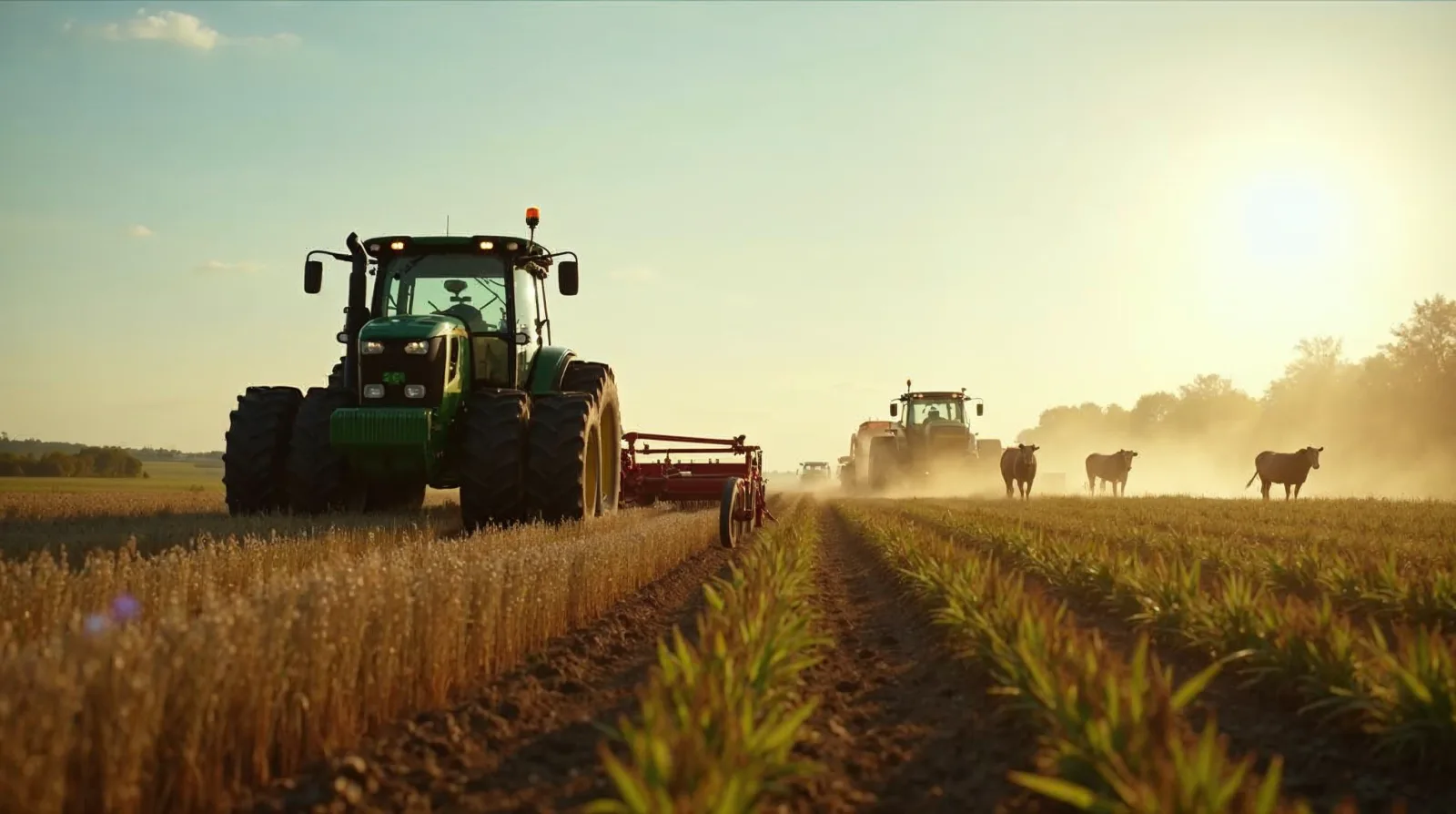
Nitrogen is the most expensive input on most corn operations and the hardest one to get right. Put too little on and you leave yield in the field. Put too much on and you have paid for fertilizer that the crop never used, much of which leaches past the roots, runs off into ditches and streams, or gases off into the air. The frustrating part is that the right rate is not a fixed number you can look up in a chart. It changes from field to field, from one end of a field to the other, and from year to year depending on weather, soil, residue, and what the crop has already pulled out of the ground. Variable rate nitrogen sidedressing is the practice of measuring the crop and the field while the corn is still growing, then applying nitrogen at a rate that matches what each part of the field actually needs - more where the crop is hungry and the ground can use it, less where it cannot. Done well, it cuts the fertilizer bill without cutting yield, and it does it by spending money where it earns a return and holding back where it would not. This guide walks through why split-application and sensor-driven nitrogen works, the sensor and modeling tools that drive the rate, the equipment that puts it down, and the honest economics of where it pays and where it does not.
Corn does not use nitrogen at a steady pace through the season. For the first few weeks after emergence the plant takes up very little, then uptake accelerates sharply through the rapid vegetative stages and peaks around tasseling, with the bulk of the season's nitrogen demand falling in a relatively narrow window from roughly the V8 stage through pollination. By the time the plant is knee-high to chest-high, it is pulling nitrogen hard and fast.
That uptake curve is the entire argument for sidedressing. Nitrogen applied in the fall or as a single full-rate shot at planting has to survive in the soil for weeks or months before the crop is ready to use most of it, and nitrogen in the soil does not sit still and wait. Nitrate is highly mobile and leaches downward with every heavy rain, and in saturated soils it is lost to denitrification, where soil microbes convert it to gas that escapes into the atmosphere. A wet spring can carry a large share of an early nitrogen application below the root zone before the corn ever gets a chance at it. The grower then ends up short at the exact moment the crop needs nitrogen most, with no good way to know how much was lost.
Splitting the application solves the timing problem. A modest amount goes down at or near planting to carry the young crop, and the larger share is held back and applied as a sidedress when the corn is actively growing and the demand is ramping up. That keeps the nitrogen in the soil for a much shorter window before the roots take it, which means less time exposed to leaching and denitrification and a higher share of the fertilizer actually ending up in the plant. Split application alone, even at a flat rate, improves nitrogen use efficiency. The reason to layer variable rate on top of it is that even at sidedress time, the right rate is not uniform across the field.
Walk any corn field at sidedress time and the crop is not uniform. Low spots that held water look pale and behind. Knolls and eroded side-hills, where the topsoil is thin and the organic matter is low, show their own pattern. Areas with heavy residue from the previous crop are tying up nitrogen as the residue breaks down. Headlands that got double-planted or compacted look different again. Manured ground, old fence lines, former feedlots, and field boundaries where the soil simply changes all create zones where the crop's nitrogen status and the soil's ability to supply nitrogen are genuinely different.
A flat sidedress rate ignores all of that. It applies the same pounds per acre to the hungry low spot and to the corner that got manure last fall and already has more nitrogen than the crop can use. The result is a field that is simultaneously under-fertilized in the spots that could have returned more yield and over-fertilized in the spots that needed less, and the two errors do not cancel out. The over-applied nitrogen is wasted money and an environmental loss, and the under-applied areas give up yield. The average rate might be defensible, but averaging the rate guarantees that most of the field gets the wrong number.
Variable rate sidedressing replaces the single field-wide number with a rate that changes on the go or zone by zone. The practical question is how to decide what that rate should be at any given point, and there are two main answers: read the crop directly with sensors, or build the rate from a map and a model. Most strong programs use a blend of both.
The most direct way to size the nitrogen rate is to ask the crop how it is doing, and that is what optical crop sensors do. Mounted on the front of a high-clearance applicator, sensors like the Trimble GreenSeeker, the Holland Scientific Crop Circle, and the Ag Leader OptRx shine their own light at the canopy and measure how much of it the plants reflect back at specific wavelengths, usually in the red, red-edge, and near-infrared bands. Because they carry their own light source, they work in any light, including at night, which matters when the sidedress window is tight.
From those reflectance readings the sensor calculates a vegetation index, most commonly NDVI or a similar index, that summarizes how green and how dense the canopy is. A dark, dense, vigorously growing canopy reflects light differently than a pale, thin, nitrogen-stressed one, and the index captures that difference. In effect the sensor is reading the same thing an experienced agronomist reads by eye when looking at crop color and biomass, but it reads it continuously, objectively, and several times per second as the applicator moves through the field.
The sensor reading on its own does not tell you the rate. A canopy can be pale because it is short on nitrogen, but it can also be pale because it is short on water, behind on heat units, stunted by compaction, or hit by disease, and dumping nitrogen on a plant that is actually short on water does nothing. The reading also has to be interpreted against what a well-fed plant in that same field, at that same stage, would look like. That is where the reference strip comes in, and it is the single most important practice in sensor-based nitrogen management.
The reference strip, often called an N-rich strip, is a pass or block in the field that was deliberately given more nitrogen than the crop could possibly need, usually applied early at planting. Because that strip is guaranteed not to be nitrogen-limited, it shows what the crop looks like when nitrogen is not holding it back. Everything else in the field gets compared against it.
The sensor system reads the lush reference strip to establish the "this is what full nitrogen looks like" benchmark, then as the applicator moves through the rest of the field it compares each live reading against that benchmark. The ratio between them is the sufficiency index - how close the crop in front of the sensor is to the well-fed reference. Where the crop reads nearly as green and dense as the reference strip, it is close to sufficient and needs little additional nitrogen. Where it reads well below the reference, it is nitrogen-stressed and has the most to gain from a higher rate. The control system runs that sufficiency index through an agronomic algorithm and adjusts the application rate on the fly.
The reference strip matters because it separates a real nitrogen problem from a pale field that just had a cold, slow spring. If the whole field including the reference strip is behind, the crop is not actually short on nitrogen and the system will not chase the color with fertilizer it does not need. If the reference strip is racing ahead of the rest of the field, the gap is real and the rate climbs to close it. Skipping the reference strip is the most common way sensor programs go wrong, because without it the sensor has no honest baseline and the rates it suggests are guesses dressed up as data.
The other approach builds the prescription before the applicator ever enters the field. Instead of reading the live canopy, map-based variable rate divides the field into management zones and assigns a target rate to each zone based on data layers: soil type maps, multi-year yield maps, electrical conductivity surveys, organic matter, elevation and drainage patterns, and satellite or drone imagery flown earlier in the season. The grower or their agronomist builds a prescription file, loads it into the rate controller, and the applicator changes rate by GPS position as it crosses each zone.
Layered on top of the map is increasingly the nitrogen model. Tools such as Adapt-N, Granular's and Corteva's Encirca nitrogen services, Pioneer's modeling, and similar university and commercial systems simulate the nitrogen cycle in the soil through the season. They take the field's soil properties, the crop, the planting date, the nitrogen already applied, and - critically - the actual weather to date, then estimate how much nitrogen has been lost to leaching and denitrification and how much the soil is mineralizing from organic matter. From that running balance they recommend how much additional nitrogen the crop still needs to hit its yield goal. After a wet spring the model will call for more, because it accounts for what the rain washed away. After a dry, mild spring it may call for less. These models turn the weather, which is the single biggest uncontrolled variable in nitrogen management, into an input rather than a guess.
The honest comparison between the two approaches is this. Sensor-based systems excel at catching in-season, in-field variability that no map predicted, because they read the actual crop on the actual day. Map and model systems excel at accounting for the whole-field nitrogen balance and at making rate decisions in fields or growth stages where the canopy has not yet differentiated enough for a sensor to read a clear signal. The strongest programs combine them: a model or soil-based map sets the backbone rate and the realistic yield goal, and the live sensor modulates that rate up and down across the field as the canopy reveals where the crop is actually hungry.
The decision tool is only half the system. The other half is the machine that meters and places the nitrogen accurately at variable rates, and the placement matters as much as the rate.
Most sidedress nitrogen is applied as liquid UAN solution or as anhydrous ammonia, and increasingly through Y-drop style applicators that deliver liquid nitrogen in a band at the base of the corn rows, right at the soil surface next to the plant where roots can reach it quickly and where less is lost to volatilization than with a broadcast spray. Y-drops mounted on a high-clearance sprayer can apply nitrogen later into the season, well past the point where a conventional tractor and toolbar would knock the corn down, which extends the window for matching the application to peak crop demand. Coulter-injection toolbars knife the nitrogen into the soil between rows, which protects it from surface loss but limits how late in the season you can run without root pruning and crop damage.
What makes any of these variable is the rate controller and the flow hardware behind it. A modern rate controller takes the target rate - whether it comes from a live sensor, a prescription map, or both - and adjusts the flow to the nozzles or knives in real time as ground speed and target rate change, using flow meters and control valves to hit the commanded gallons or pounds per acre. Section control shuts off rows over headlands and previously covered ground to avoid double application. The whole system has to be calibrated so that the rate the controller commands is the rate the soil actually receives, because a system that is off by ten percent is applying the wrong rate everywhere no matter how good the prescription is.
For sensor-based application specifically, the sensors mount ahead of the application points so the system reads the canopy and computes the rate a fraction of a second before the nitrogen goes down at that spot. Calibrating the sensor-to-rate algorithm, choosing the right vegetation index, and setting sensible minimum and maximum rate limits are all part of commissioning the system, and they are where local agronomic knowledge earns its keep, because the generic factory algorithm is a starting point, not a finished prescription for your soils and hybrids.
A variable rate system will confidently apply whatever rate its algorithm computes, including a wrong one, so the guardrails matter. Setting a sensible minimum rate keeps the system from applying near-zero nitrogen to a strong-looking area that still has real demand ahead of it, since a canopy that looks sufficient at V8 can still use more nitrogen through tasseling. Setting a maximum rate keeps the system from dumping an extreme rate on a pale spot that is pale for a reason nitrogen cannot fix, like standing water or compaction. Those limits turn the algorithm's suggestion into a bounded, agronomically sane rate.
Calibration runs deeper than just the flow hardware. The sensor algorithm needs to be matched to the region, the hybrid, and the growth stage, because the relationship between canopy reflectance and actual nitrogen need is not identical across all of those. Many growers validate the system by leaving check strips at a few fixed rates - a zero-nitrogen strip, a farmer-standard flat-rate strip, and the variable-rate treatment - and then comparing yield from the combine's yield monitor at harvest. Those check strips are how you find out whether the variable rate program actually beat your old flat rate or merely felt sophisticated. Without them, you are trusting that the system worked because it was supposed to, which is not the same as knowing it did.
The economics come down to three numbers: what the technology costs, how much nitrogen it saves or redistributes, and what that nitrogen is worth. None of those is the same on every farm, which is why variable rate nitrogen pencils out clearly on some operations and barely at all on others.
On the cost side, optical sensors and the controllers to run them are a real capital investment, typically running into the thousands to low tens of thousands of dollars for a multi-sensor setup, on top of an applicator capable of variable rate and, ideally, late-season high-clearance application. Map-based and model-based programs trade hardware cost for subscription and service cost, with nitrogen modeling platforms charging annual per-acre fees and agronomic services adding their own. Either way there is a learning curve, time spent building prescriptions or commissioning sensors, and the discipline of laying out reference and check strips every year.
On the savings side, the value shows up in two ways that are easy to confuse. The first is straightforward rate reduction - applying fewer total pounds of nitrogen while holding yield, which is most likely on fields and in years where the old flat rate was set conservatively high to cover the worst spots. The second, and often larger, value is rate redistribution - applying the same or even a slightly higher total, but moving nitrogen from spots where it was being wasted to spots where it was limiting yield, so the same fertilizer dollars produce more grain. In a high-nitrogen-price year, the rate-reduction value rises because every pound saved is worth more. In a year of normal prices and big yield potential, the redistribution value can dominate.
This is where it pays best: fields with real, mappable variability - varying soil types, eroded knolls and productive bottoms in the same field, manure history, or drainage patterns that create genuinely different nitrogen needs across the acres. Flat, uniform fields with consistent soils have less variability to exploit, so the upside is smaller. Operations that already split-apply nitrogen are most of the way there and adding variable rate is an incremental step. Operations applying everything up front have a bigger, and frankly more valuable, change to make first: move to split application, then add variable rate once the timing is right. High nitrogen prices, environmental regulations or nutrient-management requirements, and large acreages over which to spread the technology cost all push the math toward paying. Cheap nitrogen, small uniform fields, and a single up-front application all push it the other way.
The technology does not have to be adopted all at once, and the lowest-risk path in is also the one that teaches the most. The first and cheapest step costs almost nothing: lay out a nitrogen-rich reference strip and one or two zero-nitrogen check strips in a few representative fields this season. Even with no sensors and no variable rate equipment, those strips tell you whether your fields are running short or long on nitrogen and how much your soils are supplying on their own, and that knowledge improves a flat-rate decision immediately.
The second step is to move from a single up-front application to split application if you have not already, applying a starter or modest early rate and holding the majority for sidedress. That change alone captures much of the nitrogen-use-efficiency gain by shrinking the window during which nitrogen is exposed to loss, and it does not require any sensing technology - just the willingness and the equipment to make a second pass.
The third step is to layer in decision support: a nitrogen model that uses the season's weather to refine the sidedress rate, or zone maps built from yield history and soil data to vary the rate by management zone with a prescription file. These add the variability response without the capital cost of canopy sensors. The final step, for operations with the acreage and the variability to justify it, is real-time canopy sensing for true on-the-go variable rate that reads the crop as it goes.
At every step, the check strips and the yield monitor are how you keep yourself honest. Variable rate nitrogen is not a gadget that works because the brochure says so; it is a measurement-and-response discipline that works when the rate is matched to real, verified need and that wastes money when it is run on faith. Lay out the strips, read the crop or the model, set sensible limits, and let the combine tell you at harvest whether the new rate beat the old one. Do that for a couple of seasons and the program stops being an experiment and becomes the cheapest reliable way you have to spend nitrogen where it earns a return and hold it back where it does not.
Corn takes up little nitrogen in the first few weeks after emergence, then uptake accelerates sharply, with the bulk of the season's demand falling in a narrow window from roughly the V8 stage through pollination and peaking near tasseling. Sidedressing holds the larger share of nitrogen back until the crop is actively growing, shrinking the time it sits in the soil exposed to leaching and denitrification before the roots take it.
It is a pass or block given far more nitrogen than the crop could possibly need, usually early at planting, so it is guaranteed not to be nitrogen-limited. It shows what the crop looks like with no nitrogen holding it back, and the sensor compares every other live reading against it to compute a sufficiency index. Skipping the reference strip is the most common way sensor programs fail, because the system then has no honest baseline.
Sensors like the Trimble GreenSeeker, Holland Crop Circle, and Ag Leader OptRx shine their own light at the canopy and measure reflectance in the red, red-edge, and near-infrared bands, then calculate a vegetation index such as NDVI. Because they carry their own light source they work even at night. The system reads the index against the nitrogen-rich reference strip and adjusts application on the fly, several times a second as the applicator moves.
Less so. It pays best where fields have real, mappable variability, like eroded knolls and productive bottoms together, manure history, or drainage patterns that create different nitrogen needs. Flat, uniform fields have little variability to exploit. The value comes two ways: cutting total pounds while holding yield, and redistributing the same pounds from wasted spots to yield-limiting ones. If you apply everything up front, moving to split application first is the bigger win.
Join our list for practical guides on farm tech, precision agriculture, and tools that work.